
Internal News Item: App State earns R2 designation for high research activity and doctorate production

This is an example of a news story content item. This example uses partial copy and images from the Appalachian Today article App State earns R2 designation for high research activity and doctorate production.
BOONE, N.C. — Appalachian State University has received a Research Activity Designation of Research 2 from the Carnegie Classification of Institutions of Higher Education — the nation’s leading framework for categorizing U.S. higher education institutions. This new designation is awarded to institutions with high research activity and doctorate production.
“This designation aligns with App State’s steady growth in research investments, giving our students more opportunities to engage in innovative and meaningful research and creative activities alongside App State’s expert faculty and staff,” said App State Interim Chancellor Heather Norris. “This work yields real-world solutions and technologies that drive innovation — answering the needs of our communities and strengthening economies.”

In fiscal year 2024, App State set a university record for research funding, securing over $25 million in awards for faculty and staff projects. Over the last five years, App State’s funded research has increased by nearly 75%.
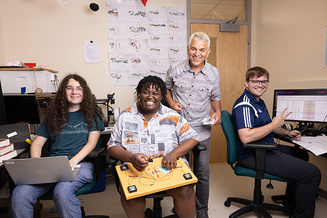
A strong emphasis on undergraduate research opportunities has long set App State apart from other research universities. App State students benefit from hands-on experience on impactful projects and avenues to present their research at major conferences — deepening learning and preparing students to excel in their future careers and/or graduate studies.
App State’s R2 designation opens the door for additional opportunities for students to conduct groundbreaking research and advance creative endeavors side-by-side with faculty and staff, according to Dr. Christine Ogilvie Hendren, vice provost of research and innovation at App State.
She added that the designation positions the university within a broader, national peer group, helping to more clearly assess App State’s performance, quality and value against similar institutions.
“At our core, we are still a teaching institution, and that will always remain fundamental to our identity,” Norris said. “This new distinction will support continued teaching and research opportunities for faculty, which provide important pathways for student learning.”

About the Carnegie Classifications
First published in 1973, Carnegie Classifications are updated every three years to reflect changes among colleges and universities and serve as a critical benchmarking tool for postsecondary institutions, as they are frequently used by policymakers, funders and researchers. In 2022, the Carnegie Foundation for the Advancement of Teaching and the American Council on Education began a collaboration to reimagine the Carnegie Classifications, with a goal of making the classifications “more representative of institutions’ missions and better reflect a variety of education pathways and student experiences.”
Carnegie Classifications rely on publicly available data sources that contain data on all institutions in the United States, including the National Center for Education Statistics’ Integrated Postsecondary Education Data System and the National Science Foundation’s Higher Education Research and Development Survey.
A Research 2 designation — part of the system’s modernized classifications for 2025 — recognizes institutions that spend at least $5 million on research and development and produce at least 20 research doctorates, on average, in a single year. App State’s research expenditures in fiscal year 2023 were more than $8.4 million — grant funding secured by university faculty and staff for research. In the 2022–23 academic year, the university awarded 20 doctoral degrees.
A working group led by Hendren is engaged in a full assessment of all R2-related factors for the university.